
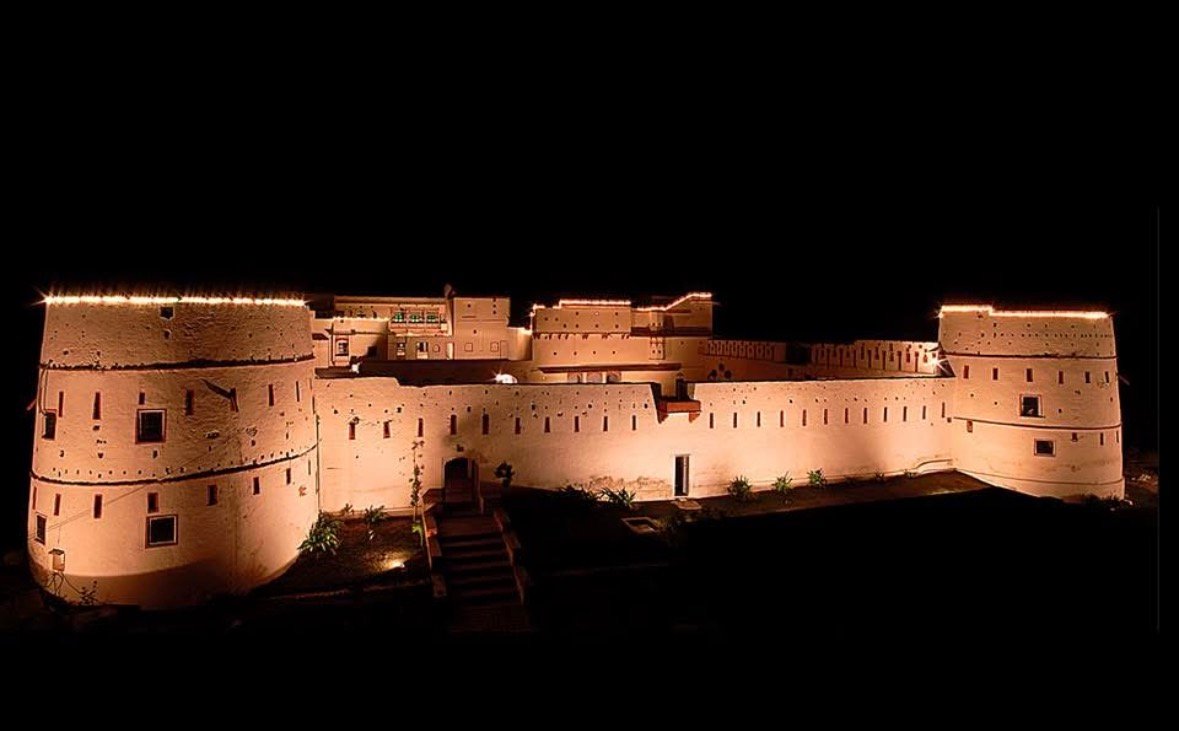
Heritage of Pachewar Garh Fort

Rooted in the grandeur of Rajputana architecture and the strategic wisdom of its chieftains, the 16th century by Rao Gopalji in 1550, 4th son of Erstwhile Pachewar Garh Fort (Thikana – Pachewar). stands as a proud guardian of Rajasthan’s royal legacy. Under the reign of Rao King Anoop Singh Ji—a valiant leader of the Kachwaha Rajput to which the rulers of Jaipur, trace their origin to the Suryavanshi lineage, claiming descent from Kusha. son of Lord Rama, the fort served as both a defensive bastion and a noble residence for the rulers of Pachewar.
Set against the tranquil expanse of Pampasagar Lake,whose mirror-like waters reflect the fort’s towering bastions, Pachewar Garh occupies a landscape steeped in both natural beauty and spiritual significance. On the lake’s bank rises the Chhatriya. a finely carved cenotaph honouring the valor and memory of the Rajput warriors, while the nearby Mashi Nadi weaves through the countryside, bringing life to the fields and prosperity to the people.
Originally constructed with strong fortifications, grand gateways, and watchtowers to guard against invaders, Pachewar Garh – a fighting fort, evolved over time into an opulent palace, echoing the peace and refinement of its later years and carries the imprints of Rajput martial strength.
Every corner of the fort—from the fresco-adorned zenana (women’s quarters) to the grand durbar halls— whispers tales of royal processions, festive gatherings, and diplomatic councils.Pachewar Garh Fort is one of the few heritage properties where restoration has been carried out with steadfast dedication to authenticity, ensuring guests step into the same regal atmosphere that once welcomed nobility and foreign dignitaries.
Today, with modern comforts seamlessly blending into its historic character, the fort offers travellers a rare chance to experience the luxury, elegance, and traditions of Rajput hospitality. Just 90 km from Jaipur, it is not merely a destination—but a journey into Rajasthan’s living heritage.